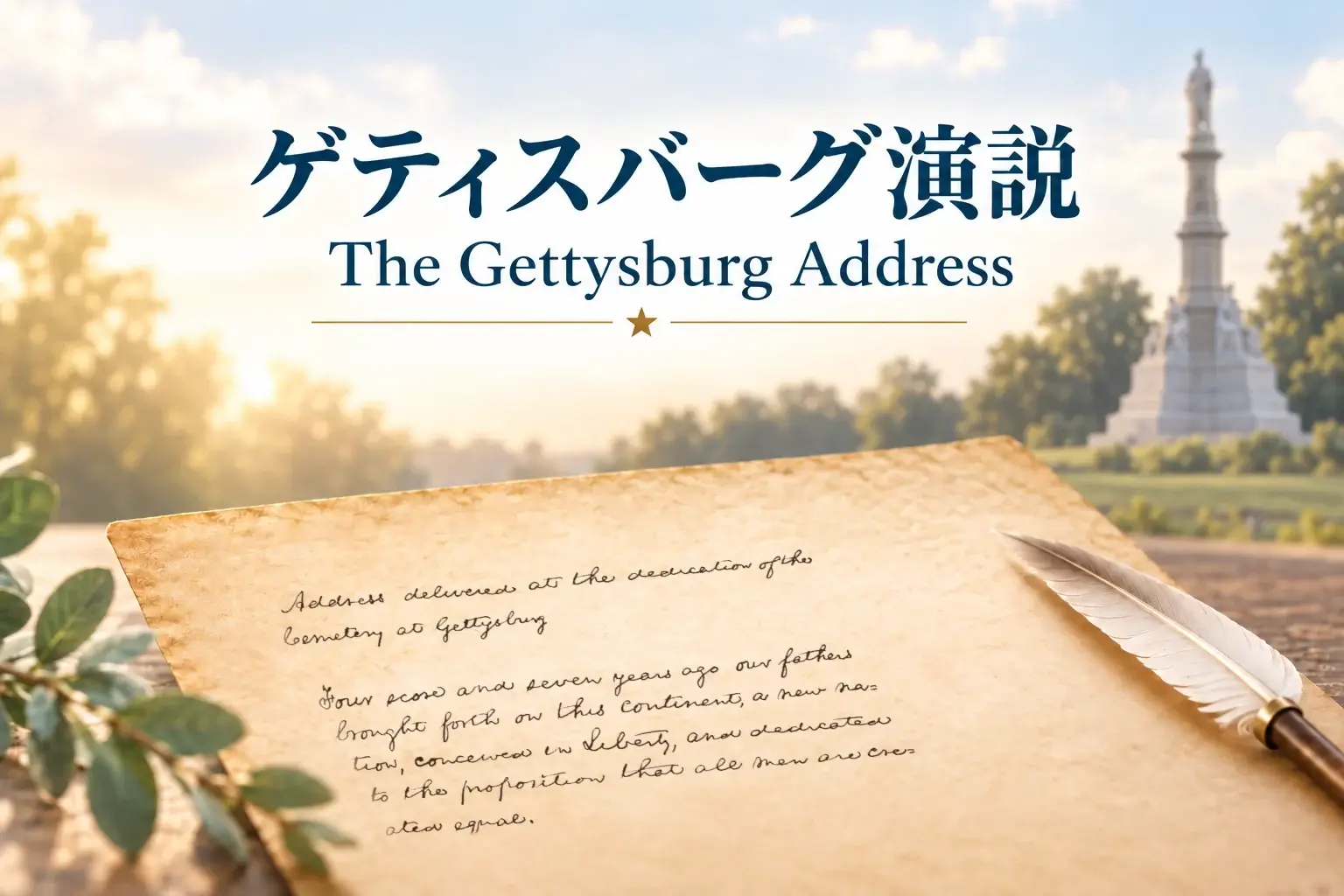
ゲティスバーグ演説(The Gettysburg Address) は、1863年11月19日、南北戦争の激戦地となったペンシルベニア州ゲティスバーグで、戦死者の墓地の奉献式に際してエイブラハム・リンカーン大統領が行った演説です。
演説はわずか約270語、時間にして2分ほどでした。しかし、その結びの government of the people, by the people, for the people(人民の、人民による、人民のための政治)という言葉は、民主主義を表す言葉として、今も世界中で引用されています。
このページでは、ゲティスバーグ演説の英語原文と和訳を掲載し、有名な一節を英文の構造から読み解いていきます。
ゲティスバーグ演説 全文(英語原文)
Four score and seven years ago our fathers brought forth on this continent, a new nation, conceived in Liberty, and dedicated to the proposition that all men are created equal.
Now we are engaged in a great civil war, testing whether that nation, or any nation so conceived and so dedicated, can long endure. We are met on a great battle-field of that war. We have come to dedicate a portion of that field, as a final resting place for those who here gave their lives that that nation might live. It is altogether fitting and proper that we should do this.
But, in a larger sense, we can not dedicate — we can not consecrate — we can not hallow — this ground. The brave men, living and dead, who struggled here, have consecrated it, far above our poor power to add or detract. The world will little note, nor long remember what we say here, but it can never forget what they did here. It is for us the living, rather, to be dedicated here to the unfinished work which they who fought here have thus far so nobly advanced. It is rather for us to be here dedicated to the great task remaining before us — that from these honored dead we take increased devotion to that cause for which they gave the last full measure of devotion — that we here highly resolve that these dead shall not have died in vain — that this nation, under God, shall have a new birth of freedom — and that government of the people, by the people, for the people, shall not perish from the earth.
※リンカーン自筆の原稿のうち、最も広く用いられている「ブリス版(Bliss copy)」の本文です。
出典:Abraham Lincoln Online, “Gettysburg Address”(本文)、U.S. National Park Service, “Gettysburg Address”(ブリス版について)
音声を聞く
ゲティスバーグ演説 全文(和訳)
87年前、私たちの父祖たちはこの大陸に、新しい国家を生み出しました。自由の理念のもとに構想され、すべての人は平等に造られているという命題に捧げられた国家です。
いま私たちは大きな内戦のさなかにあり、その国家が、あるいはそのように構想され、そのように捧げられたいかなる国家であれ、長く存続できるのかどうかが試されています。私たちは、その戦争の大きな戦場に集まっています。私たちがここに来たのは、その国家が生き続けるようにと、ここで命を捧げた人々の最後の安息の地として、この戦場の一部を捧げるためです。私たちがそうすることは、まったくふさわしく、正しいことです。
しかし、より大きな意味では、私たちはこの土地を捧げることはできません。清めることも、神聖なものとすることもできません。ここで戦った勇敢な人々は、生きている者も死んだ者も、すでにこの土地を清めたのであり、それは私たちの乏しい力で何かを加えたり減らしたりできる域を、はるかに超えています。世界は、私たちがここで語ることにほとんど注意を払わず、長く記憶にとどめることもないでしょう。しかし、彼らがここで成し遂げたことを、決して忘れることはできません。むしろ、生きている私たちこそが、ここで戦った人々がこれまで気高く前進させてきた未完の事業に、ここで身を捧げるべきなのです。むしろ私たちこそが、目の前に残された大いなる任務に、ここで身を捧げるべきなのです。――すなわち、これらの名誉ある戦死者たちから、彼らが最後の全き献身を捧げたその大義への、いっそうの献身を受け継ぐこと。そして、ここで固く決意することです。これらの死者の死が決して無駄にならないようにと。この国家が、神のもとで、自由の新たな誕生を迎えるようにと。そして、人民の、人民による、人民のための政治が、この地上から決して消滅することのないようにと。
※ELMラボ訳。英文の構造が見えるように訳しています。
冒頭の一文:Four score and seven years ago
演説は、次の一文で始まります。
Four score and seven years ago our fathers brought forth on this continent, a new nation, conceived in Liberty, and dedicated to the proposition that all men are created equal.
Four score and seven years ago = 87年前
score は「20」を表す古い言い方です。four score and seven は「20×4+7」で 87 になります。
演説が行われた1863年から87年さかのぼると、1776年。つまりリンカーンは、この演説をアメリカ独立宣言の年から語り始めているのです。「87年前」とは言わず、聖書を思わせる古風で格調のある表現を使っており、演説の冒頭に厳かな響きを与えています。
文の骨格
| 文の要素 | 英語 | 意味 |
|---|---|---|
| 主語 | our fathers | 私たちの父祖たちは |
| 述語 | brought forth | 生み出した |
| 目的語 | a new nation | 新しい国家を |
bring forth は「生み出す、産む」という意味です。基本的な語順なら brought forth a new nation on this continent となるところを、on this continent が先に置かれ、目的語の a new nation がその後に続いています。その結果、a new nation の直後に conceived … and dedicated … という長い説明を自然につなげる語順になっています。
a new nation を説明する2つの過去分詞
| # | 原文 | 意味 |
|---|---|---|
| ① | conceived in Liberty | 自由の理念のもとに構想された |
| ② | dedicated to the proposition that all men are created equal | すべての人は平等に造られているという命題に捧げられた |
conceived と dedicated は過去分詞で、どちらも直前の a new nation を後ろから説明しています。修正第1条で、law を -ing の語句が後ろから説明していたのと同じ、「名詞のあとに説明を足していく」英語の語順です。
the proposition that all men are created equal の that は、proposition(命題)の中身を説明する同格の that です。all men are created equal は、独立宣言の一節そのものです。
語順どおりに読む
| 英語 | 意味 |
|---|---|
| Four score and seven years ago | 87年前 |
| our fathers brought forth | 私たちの父祖たちは生み出した |
| on this continent, | この大陸に |
| a new nation, | 新しい国家を |
| conceived in Liberty, | (その国家は)自由の理念のもとに構想され |
| and dedicated to the proposition | そして、命題に捧げられた |
| that all men are created equal. | すべての人は平等に造られている、という |
「誕生」と「死」の言葉でできた演説
冒頭の brought forth(生み出す)と conceived(宿される/構想される)は、どちらも誕生のイメージを持つ言葉です。そして演説の最後では、a new birth of freedom(自由の新たな誕生)と、shall not perish(死に絶えることはない)という言葉が使われます。
| 演説の位置 | 英語 | 意味 |
|---|---|---|
| 冒頭 | brought forth / conceived | 生み出した/構想された・宿された |
| 中盤 | gave their lives / the brave men, living and dead | 命を捧げた/勇敢な人々、生きている者も死んだ者も |
| 結び | a new birth of freedom / shall not perish | 自由の新たな誕生/消滅しない |
国家の誕生から始まり、戦死者の死を経て、国家の「新たな誕生」で終わる。演説全体が、誕生と死と再生の言葉で組み立てられています。
dedicate の6回のくり返し
この短い演説の中で、dedicate(捧げる)は6回使われています。6回を順に見ると、「何が、何に捧げられるのか」が3つの段階で変わっていくことがわかります。
| 段階 | 原文 | 何が、何に捧げられるか |
|---|---|---|
| ① 過去:建国 | a new nation … dedicated to the proposition(ほか1回) | 国家が、平等という理念に捧げられた |
| ② 現在:式典 | We have come to dedicate a portion of that field / we can not dedicate … this ground | 私たちが、土地を捧げに来た。しかし、捧げることはできない |
| ③ これから:私たちの務め | for us … to be dedicated here to the unfinished work(ほか1回) | 私たち自身が、未完の事業に捧げられるべきだ |
この日の式典の目的は、戦場の一部を墓地として「捧げる」ことでした(②)。ところがリンカーンは、すぐに「私たちにはこの土地を捧げることはできない」と言います。この土地は、ここで戦った人々がすでに神聖なものにしているからです。
そして最後に、リンカーンは話の焦点を、「土地を捧げること」から、「生きている私たち自身が未完の事業に身を捧げること」へと移します(③)。同じ dedicate をくり返しながら、「土地を捧げる式典」を、聞いている一人ひとりが未完の事業への献身を新たにする場へと転換しているのです。
文法の面では、②の2回は dedicate + 土地(土地を捧げる)という能動態、③の2回は be dedicated to ~(~に捧げられる、~に身を捧げる)という受動態です。捧げる「対象」だった土地に代わって、今度は「私たち」自身が捧げられる側に立つ。この態の切り替えが、演説の転換点になっています。
can not を3回重ねる
we can not dedicate — we can not consecrate — we can not hallow — this ground.
dedicate(捧げる)に続いて、より明確に「神聖にする」という意味を持つ consecrate(清める、神聖なものとして捧げる)、hallow(神聖なものとする)を重ねています。目的語の this ground は、3つの動詞すべてに共通です。
結びの一文:the great task の中身
演説の最後の文は、約80語の長い一文です。
It is rather for us to be here dedicated to the great task remaining before us — that from these honored dead we take increased devotion to that cause for which they gave the last full measure of devotion — that we here highly resolve that these dead shall not have died in vain — that this nation, under God, shall have a new birth of freedom — and that government of the people, by the people, for the people, shall not perish from the earth.
骨格は、前半の It is rather for us to be here dedicated to the great task remaining before us(むしろ私たちこそが、目の前に残された大いなる任務に、ここで身を捧げるべきだ)です。
remaining before us は、the great task を後ろから説明する現在分詞の語句で、その任務がまだ終わっておらず、「私たちの前に」残されていることを示しています。for us と before us で「私たち」がくり返されることで、この任務を担うのは、いまここで演説を聞いている人々自身だ、という呼びかけになっています。
ダッシュ(–)のあとには、that で始まる節が次々に続き、the great task(大いなる任務)の内容が具体化されていきます。
| 原文 | 意味 |
|---|---|
| that from these honored dead we take increased devotion … | 戦死者たちから、いっそうの献身を受け継ぐこと |
| that we here highly resolve | ここで固く決意すること |
| that these dead shall not have died in vain | これらの死者の死が無駄にならないようにと |
| that this nation, under God, shall have a new birth of freedom | この国家が、神のもとで、自由の新たな誕生を迎えるようにと |
| and that government of the people, by the people, for the people, shall not perish from the earth | 人民の、人民による、人民のための政治が、地上から消滅しないようにと |
特に that we here highly resolve のあとでは、these dead shall not have died in vain / this nation … shall have a new birth of freedom / government … shall not perish from the earth という3つの内容が、shall をくり返しながら、私たちの「決意」の内容として連なっていると読むことができます。
一方、原文ではダッシュと that の反復によって、それぞれが the great task の内容としても強く響くように書かれています。一つの文法構造に当てはめるだけでなく、ダッシュと that がつくり出すリズムそのものを味わいたい一文です。
独立宣言の有名な一節でも、We hold these truths to be self-evident のあとに、that で始まる節が5つ積み重ねられていました。長い一文の中で that 節を積み上げる書き方は、独立宣言とゲティスバーグ演説の両方に見られます。
of the people, by the people, for the people
演説の最後を飾るのが、次の一節です。
government of the people, by the people, for the people
同じ the people に、of / by / for という3つの前置詞を付けて、リズムよく並べています。
| 英語 | 意味 | ニュアンス |
|---|---|---|
| government of the people | 人民の政治 | 人民に属する、人民を基盤とする政治 |
| government by the people | 人民による政治 | 人民自身が行う政治 |
| government for the people | 人民のための政治 | 人民の利益のために行われる政治 |
ここでの government は、「政府」という組織だけでなく、「統治、政治のあり方」を指しています。そのため、日本語では「人民の、人民による、人民のための政治」と訳されるのが一般的です。
前置詞を1つ変えるだけで、同じ the people が「帰属・基盤」(of)、「行為者・担い手」(by)、「受益者・目的」(for)と、まったく違う役割になります。前置詞の働きを学ぶうえでも、とてもよい例文です。
In Simple English
演説の内容を、やさしい現代英語で言い換えると次のようになります。
Eighty-seven years ago, our ancestors created a new nation on this continent. It was built on freedom and on the idea that all people are created equal.
Now we are fighting a great civil war, which is testing whether a nation like ours can survive. We have come here to set aside part of this battlefield as a final resting place for the soldiers who died so that the nation might live. It is right for us to do this.
But in a bigger sense, we cannot make this ground sacred, because the brave soldiers who fought here have already done that, far more than we ever could. The world may not remember our words for long, but it will never forget what they did here. It is we, the living, who must carry on the unfinished work they began. We must make sure that their deaths were not for nothing, that this nation will have a new beginning of freedom, and that government of the people, by the people, for the people will never disappear from the earth.
原文を一語ずつ置き換えたものではなく、内容をやさしい英語で表したものです。
Words & Phrases
| Original English | Simple English / Notes |
|---|---|
| score | twenty 「20」を表す古い言い方。four score and seven は87です。 |
| bring forth | give birth to; create 「生み出す、産む」。 |
| conceive | form an idea; become pregnant with a child 「構想する」「(子を)身ごもる」。原文では受動態の conceived が使われ、国家の誕生のイメージと重なっています。 |
| proposition | an idea or statement to be accepted as true 「命題」。 |
| civil war | a war between groups in the same country 「内戦」。the Civil War(大文字)は、アメリカの南北戦争を指します。 |
| endure | continue to exist; last 「存続する、持ちこたえる」。 |
| dedicate | give something for a special purpose 「捧げる」。演説の中で6回使われるキーワードです。 |
| consecrate | make holy 「神聖なものとして捧げる、清める」。 |
| hallow | make holy 「神聖なものとする」。hallowed ground(聖地)という表現もあります。 |
| detract | take away 「減らす、損なう」。add or detract で「加えたり減らしたり」。 |
| little note | hardly notice ここでの little は副詞で「ほとんど〜ない」の意味です。little note は hardly notice に近い表現です。 |
| the last full measure of devotion | in this context, giving their lives 「最後の全き献身」。この文脈では、命そのものを捧げたことを指します。 |
| resolve | decide firmly 「固く決意する」。 |
| in vain | for nothing; without result 「むだに」。 |
| perish | die; disappear 「滅びる、消滅する」。 |
コラム:2時間の演説と2分の演説
この日の奉献式で、主な演説を任されていたのは、リンカーンではありませんでした。当時を代表する雄弁家、エドワード・エヴェレットが、約2時間にわたる演説を行いました。リンカーンに求められていたのは、そのあとの「ふさわしい短い言葉」だったのです。
演説の中でリンカーンは、The world will little note, nor long remember what we say here(世界は、私たちがここで語ることにほとんど注意を払わず、長く記憶にとどめることもないだろう)と語りました。しかし実際に歴史に残ったのは、2分ほどのリンカーンの演説のほうでした。
エヴェレットは翌日、リンカーンに手紙を送り、「私が2時間かけて、あなたが2分で語った式典の核心に近づけていたなら、うれしく思います」という趣旨の言葉を書き送っています。
コラム:5つの原稿と under God
ゲティスバーグ演説には、リンカーン自筆の原稿が5つ残っています。それぞれ稿と関係の深い人物の名前から、ニコレイ版、ヘイ版、エヴェレット版、バンクロフト版、ブリス版と呼ばれ、少しずつ文言が異なります。
たとえば、this nation, under God, shall have a new birth of freedom の under God(神のもとで)は、ニコレイ版とヘイ版にはありません。一方、演説当日の新聞記者による記録には under God が含まれていることから、リンカーンは実際の演説でこの言葉を加えたと考えられています。
このページで掲載しているのは、現存する5つの自筆稿のうち最後に書かれ、唯一リンカーンの署名と日付が入ったブリス版です。ワシントンD.C.のリンカーン記念館の壁に刻まれているのも、この版の本文です。
短い演説を「構造」で読む
ゲティスバーグ演説は、約270語という短さの中に、独立宣言の理念、誕生と死のイメージ、dedicate のくり返し、that 節の積み重ね、そして of / by / for の対比が、緻密に組み込まれています。一文一文の骨格をつかみながら読むことで、この演説がなぜ150年以上も読み継がれてきたのかが見えてきます。